ISLAMABAD: President Asif Ali Zardari chaired a high-level consultative meeting at the Aiwan-e-Sadr on Thursday to review the evolving economic and energy situation amid global oil supply constraints, rising petroleum prices and shifting regional security dynamics, with participants agreeing on the need for a coordinated national response across economic management, energy planning, food security and broader security considerations.
Prime Minister Shehbaz Sharif and Chief of Army Staff and Chief of Defence Forces (COAS & CDF) Field Marshal Syed Asim Munir also attended the meeting. Other participants included Deputy Prime Minister/Foreign Minister (DPM/FM) Ishaq Dar, Pakistan Peoples Party Chairman Bilawal Bhutto Zardari, Interior Minister Mohsin Naqvi, Minister for Finance Muhammad Aurangzeb, Energy and Petroleum Minister Ali Pervaiz Malik, Economic Affairs Minister Ahad Khan Cheema and finance secretary.
The meeting reviewed the impact of fluctuations in global oil and gas supplies and prices on Pakistan’s economy, with particular focus on managing inflationary pressures and ensuring energy security. The finance and petroleum ministers briefed the meeting on the ongoing measures to stabilise petroleum prices, manage the effects of rising fuel costs on other sectors of the economy and enforce fiscal discipline through austerity measures to reduce expenditure pressures.
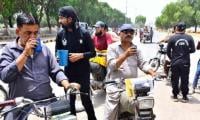
The broader regional situation also came under discussion, including its implications for Pakistan’s security, economic outlook and food security. The meeting emphasised the need for a coordinated national response, noting that policy decisions must prioritise stability while safeguarding the interests of the public. The meeting underscored the importance of maintaining national consensus and strengthening institutional coordination in view of emerging regional challenges. It was agreed that economic management, energy planning, food security and broader security considerations must remain closely aligned to meet the challenging situation. The meeting also emphasised the need for public awareness to reduce fuel consumption, encourage the use of public transportation, and promote shared ride systems.
Meanwhile, following a temporary pause for Eidul Fitr that concluded on March 24, operations under ‘Operation Gazab Lil-Haq’ have resumed and will continue until the Afghan Taliban regime ends its support for terror infrastructures and proxies. “Operation Gazab Lil-Haq is ongoing. It is a precise, targeted operation, military campaign directed against terrorist leadership and their support and command, infrastructure, logistics, logistic networks and facilitators and abettors of these terrorist acts within the Taliban regime and in the Taliban controlled area,” the spokesperson at the Foreign Office said during weekly media briefing on Thursday.
“In deference to the Eidul Fitr celebrations and response to requests from our brotherly Islamic countries, a temporary pause was observed during this period. The pause has concluded midnight between, I think, 23rd and 24th of March. So, operations under Operation Gazab Lil Haq continue now until the objectives are achieved, and until the Afghan Taliban regime reviews its misplaced priority of supporting terror infrastructures and terror proxies over the welfare of their own Afghan people. So, our position is anchored in this broad policy statement,” he said.
As regards Torkham border, there may have been a temporary opening. Tahir Andarabi did not have any details of that. “You cannot fault us for not exploring all avenues of peace. We did explore all avenues but violence and attack from Afghanistan did not stop,” he replied to a query.
“As regards mediation by China. I wish to reiterate, we have multiple channels of communications, bilateral, we also have a trilateral mechanism with China on Afghanistan. We remain engaged with China on these issues, and we appreciate their role and position.” The fact is that UN reports have very categorically linked the TTP and other terrorist elements, Fitna al-Khawarij, Fitna al-Hind, with the TTA, with the Taliban regime. These connections have been well documented. These UN reports verify that the ammunition depot that was hit, could potentially be in use by Fitna al-Khawarij and Fitna al-Hind elements. Pakistan does not need any further proof for that.”
He said Islamabad has reasons to believe that its actions and strikes have decreased the ability of the TTP to foment, engineer, mastermind and perpetrate attacks against Pakistan. And as this Ghazab Lil-Haq pause has ended, we remain vigilant to ensure that our people are protected and there are no attacks against Pakistan.
Meanwhile, in a policy statement, DPM/FM Ishaq Dar said that the US and Iran are involved in indirect talks while Pakistan remains fully committed to promoting peace and continues to make every effort to ensure stability in the region and beyond, in which dialogue and diplomacy is the only way forward. “There has been unnecessary speculation in the media regarding peace talks to end ongoing conflict in the Middle East. In reality, US-Iran indirect talks are taking place through messages being relayed by Pakistan. In this context, the United States has shared 15 points, being deliberated upon by Iran. Brotherly countries of Turkiye and Egypt, among others, are also extending their support to this initiative,” he tweeted on X.
Elaborating on the role that Pakistan is playing to bring Iran and the US to the negotiating table, Spokesperson Tahir Andrabi, confirming Pakistan’s offer, said, “As regards the timing, the venue, the itinerary, these details we will reveal in due course. Let us not speculate and wait for official announcements. Our endeavor is a process, not an event,” he told the weekly media briefing. The question, he pointed out, is not whether one side accepts or not. It is about the process, and developments in the process will be announced as and when they happen.
“Please do not focus on any specific event – whether the 15 points have come, whether five points have been shared, whether side A has accepted, whether side B has rejected. Elevate yourselves from these positions and think about the whole process. When the process allows concrete information to be shared with the media, that information will be shared forthwith,” he cautioned. He urged the media to exercise responsibility, refrain from conjecture and rely solely on official channels for accurate and timely information. “Let me emphasise that diplomacy, particularly in moments of heightened sensitivity, requires discretion, patience and confidentiality,” he said.
Pakistan, he stressed, would continue to be optimistic as it looked ahead, even though the way ahead was anything but smooth. “There would be hiccups, obstacles and roadblocks – that should not deter us from pursuing peace, process and dialogue. The ultimate objective should be peace,” he said.
The spokesperson was asked to define the exact role that Pakistan was playing, whether it was a mediator or a facilitator. “In Pacific Settlement of Disputes, which is a UN Charter-sanctioned term covered under Chapter VI of the UN Charter, there are various tiers of negotiation processes to seek a peaceful settlement of disputes. These are: arbitration, mediation, facilitation and good offices. Our prime minister has used the words facilitating and hosting. I think let us stick to that,” he explained.
The spokesperson refrained from speculating as where Pakistan’s efforts would lead do but said the government remained hopeful, because diplomacy teaches one to remain optimist and work towards a solution. “Pakistan will continue to play a principled and proactive role in building bridges guided by sincerity of intent and clarity of purpose, as its objective is unwavering and unambiguous leading to peace.”
To a query on Saudi Arabia, he stated that the kingdom is a key interlocutor and a major party in the process. “Saudi Arabia has been attacked. So, of course, conversations with Saudi Arabia have gone on. Telephonic conversation took place between the prime minister and the crown prince, and also earlier between the DPM/FM and the Saudi foreign minister. These conversations are ongoing. Saudi Arabia is a brotherly country. Whatever we do in terms of our advocacy for peace, dialogue and peaceful settlement of disputes – all of this is in very close coordination with Saudi Arabia,” he added. In fact, he pointed out, this is to a certain degree is applicable to all the Gulf countries. “We unequivocally condemned the attacks launched on these Gulf countries, including Saudi Arabia, the UAE, Qatar, Kuwait and Bahrain. They are our interlocutors. Our position is principled and anchored in international law and the UN Charter. It is not against any individual country. Hence, our position is respected across international and regional capitals. Our dialogue goes on with these countries, and we obviously take their views into account in furthering our diplomatic engagements on these issue,” he said.
To another query, the FP spokesperson said he had no information on whether Pakistan actually physically or digitally passed on those 15 points (to Iran). Pakistan, he pointed, is a very safe and secure venue (to hold talks) and safety concerns were not valid.
About the Indian External Affairs minister’s remarks on Wednesday, in which he had called Pakistan “dalal” or “broker”, the spokesperson said, “Such undiplomatic rhetoric betrays a deeper sense of frustration. When arguments run thin, invective appears to fill the gap. Pakistan does not subscribe to such megaphone theatrics. Our approach is anchored in restraint, decorum and not in rhetorical excesses.”
When asked about the missile attack on Oman which turned out to be an American Patriot missile, the spokesperson replied, “False-flag operations cannot be ruled out.”
With regards to a statement by the prime minister of Bangladesh, in which he had recalled the bitter history of 1971, the spokesperson responded, “We have seen the statement. Pakistan considers the events of 1971 to be complex and open to differing interpretations, which warrants constructive engagement grounded in objectivity, mutual respect and a shared commitment to historical accuracy. Pakistan reaffirms its commitment to a forward-looking relationship with Bangladesh, with the brotherly people of Bangladesh, based on mutual respect and constructive cooperation to strengthen people-to-people ties, economic engagement and regional stability, serving the mutual interests of both countries.”
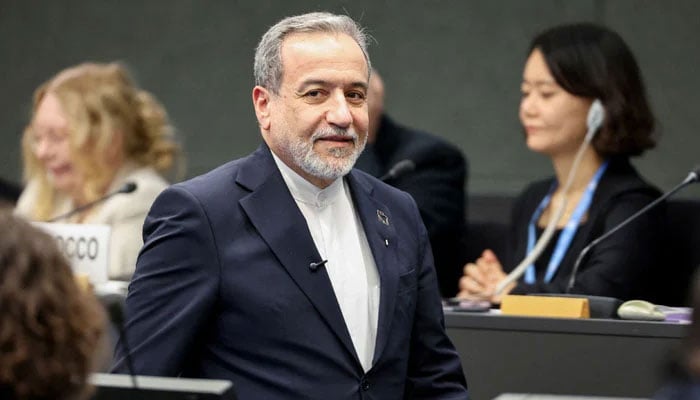
Meanwhile, Israel has taken Iranian Foreign Minister Abbas Araghchi and parliament speaker Mohammad Bagher Qalibaf off its hit-list after Pakistan requested Washington not to target them, a Pakistani official told Reuters. “The Israelis had their… coordinates and wanted to take them out, we told the US if they are also eliminated then there is no one else to talk to, hence the US asked the Israelis to back off,” the official said.
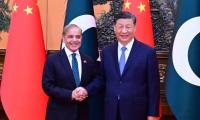
Meanwhile, Prime Minister Shehbaz Sharif, while appreciating China’s steadfast economic support, reaffirmed Pakistan’s commitment to advancing CPEC 2.0, with a focus on agriculture, industrial cooperation and priority infrastructure projects. The prime minister, in a meeting with the Chinese Ambassador in Pakistan Jiang Zaidong, emphasised continued close coordination at all levels on issues of mutual interest. Both the sides expressed satisfaction at ongoing exchanges and looked forward to high-level engagements to mark the 75th anniversary of diplomatic relations.
Separately, the prime minister on Thursday received a telephone call from his Malaysian counterpart Anwar Ibrahim and briefed him on the latest diplomatic efforts, including discussions with leaders of Gulf countries and Iran, to bring the US and Iran to the negotiating table.
Meanwhile, a fourth Pakistani national was killed on Thursday in an incident involving falling debris in the United Arab Emirates. The incident occurred in Sweihan Street, a mixed residential and industrial area in the northeastern part of Abu Dhabi city, after debris fell following the interception of a ballistic missile by air defence systems, authorities said. The embassy stated that it was in close coordination with UAE authorities to provide all possible assistance to the affected family and to ensure the early repatriation of the deceased. Earlier, three others lost their lives in two similar incidents in Abu Dhabi and one in Dubai. The UAE authorities confirmed that the incident also killed an Indian national and injured three others — of Emirati, Jordanian and Indian nationalities — with injuries ranging from moderate to serious.