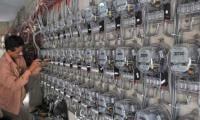
ISLAMABAD: Prime Minister Shehbaz Sharif on Friday directed that loss-making electricity feeders be shifted to solar power with the cooperation of local communities and provincial governments to ensure uninterrupted electricity supply in remote areas of the country.
Chairing a high-level review meeting on solarization to ensure uninterrupted power supply to remote areas of the country, the prime minister said the initiative would help reduce financial losses of deficit-running feeders while providing continuous and affordable electricity to those regions.
He directed the immediate launch of pilot projects on high-loss feeders of Peshawar Electric Supply Company (Pesco) and Quetta Electric Supply Company (Qesco).
He emphasised that consultation with elected representatives and active community participation would be ensured to guarantee the success and sustainability of the pilot projects.
During the briefing, the meeting was informed that transitioning loss-making feeders to solar power would create environmentally friendly, low-cost and sustainable micro-grids for local populations.
The project will be implemented through a partnership involving local communities, provincial governments and the federal government.
The meeting was further told that the initiative would not only generate low-cost electricity but also significantly reduce the future losses of power distribution companies.
The prime minister granted in-principle approval to the solarisation initiative and directed that work in Khyber Pakhtunkhwa and Balochistan should commence without delay.
The meeting was attended by Deputy Prime Minister and Foreign Minister Ishaq Dar, Minister for Power Awais Ahmed Khan Leghari, Minister for Petroleum Ali Pervaiz Malik, Minister of State for Finance and Revenue Bilal Azhar Kayani, the Khyber Pakhtunkhwa and Balochistan chief secretaries and other senior officials.
Separately, in a meeting with a delegation of the UAE’s Sajwani Group, the prime minister, while appreciating the growing interest of the UAE investors in Pakistan’s digital economy, said that the Government of Pakistan accorded special importance to business-to-business (B2B) cooperation in the fields of information technology, digital innovation, blockchain and other emerging technologies.
He said that the recent high-level contacts and exchanges had increased mutual trust between the private sectors and investors of Pakistan and the United Arab Emirates, providing a strong foundation for advancing bilateral cooperation.
He said that the deep, fraternal and longstanding Pakistan-UAE relations were based on mutual trust which were heading towards more effective economic cooperation and investment.
The prime minister viewed that the recent visit of UAE President Sheikh Mohamed bin Zayed Al-Nahyan to Pakistan had further strengthened the bilateral partnership, also creating a conducive environment for promoting cooperation. He said that the UAE’s investment and global connectivity, combined with Pakistan’s human resources and workforce, represented a highly beneficial partnership for economic growth. The members of the Sajwani Group delegation thanked the prime minister for warm hospitality and reiterated their commitment to further strengthen investment cooperation and economic partnership. Prime Minister Shehbaz, who also hosted a luncheon for the delegation, expressed confidence that, with the strong support of the political leadership of both countries, the engagement in the private sector would take Pakistan-UAE economic cooperation to new heights.
Meanwhile, chairing a high-level review meeting, the prime minister approved preparations for a fully digitised Ramazan relief package and praised the transparency of last year’s programme after a third-party audit found no financial irregularities or serious administrative lapses.
Shehbaz was briefed that a globally reputed audit firm had validated the 2025 Ramazan package, terming it effective and transparent. The audit confirmed that funds were disbursed without misuse, marking a major turnaround from decades of mismanagement and corruption linked to the Utility Stores system.
The premier said the government had dismantled an exploitative mechanism that had deprived deserving families of subsidised food items for years, replacing it with a transparent and technology-driven model aimed at protecting the dignity of beneficiaries.
Directing authorities to roll out an even more effective relief package for the upcoming Ramazan and Eid, he ordered that all cash assistance be distributed exclusively through digital wallets to ensure transparency and prevent leakages. He said digital disbursement would also support the government’s broader push towards a cashless economy.
He instructed all relevant ministries to expand the coverage of the Ramazan package to include the maximum number of low-income and vulnerable households. He also ordered the establishment of a digital dashboard and a robust monitoring system to ensure real-time oversight of payments and distribution.
Officials informed the meeting that the State Bank of Pakistan would be involved in the distribution mechanism to strengthen cashless payments. It was also disclosed that under the Benazir Income Support Programme, a Social Protection Wallet is being introduced, with free SIM cards being issued to beneficiaries. From March 2026 onwards, all relief payments will be made digitally through these SIMs.
The prime minister termed the elimination of corruption from Utility Stores a “landmark reform” and reiterated that providing financial relief and food security to poor and middle-income households remained the government’s top priority.
The meeting was attended by Finance Minister Muhammad Aurangzeb, Information Minister Attaullah Tarar, Poverty Alleviation Minister Syed Imran Ahmed Shah, National Food Security Minister Rana Tanveer Hussain, IT Minister Shaza Fatima Khawaja, Special Assistant Haroon Akhtar and senior officials from Nadra, PTA and other relevant departments.
Separately, chairing another high-level meeting, the prime minister approved a national policy framework to reform Pakistan’s gemstones and precious stones sector, seeking to unlock an estimated $450 billion worth of reserves and raise exports from the current $5.8 million annually to $1 billion within five years.
He directed that priority reforms be implemented during the current year, including geological mapping, international-standard certification and modern mining practices, to bring Pakistan’s largely informal gemstone trade in line with global requirements.
Pakistan is home to more than 30 varieties of precious stones, including emeralds, rubies, topaz and peridot, yet the sector remains underdeveloped despite over 5,000 companies and businesses being linked to gemstone processing and trade, officials told the meeting.
Shehbaz ordered immediate geological surveys to determine the exact location and commercial value of gemstone deposits and instructed all relevant federal and provincial authorities to coordinate closely with private-sector stakeholders.
He also directed the establishment of international-standard laboratories and certification regimes, stressing that credible certification was essential for accessing high-value global markets and curbing widespread smuggling of precious stones.
Under the approved framework, two Centres of Excellence would be established during the current year to support value addition, skills development and the adoption of modern processing technology. The policy also prioritises attracting foreign investment and encouraging private companies, particularly young entrepreneurs, to enter the sector.
Officials briefed the prime minister that most Pakistani gemstones are exported in raw or semi-processed form, resulting in significant loss of value. The new policy aims to promote domestic processing, introduce a national certification regime, establish a regulatory authority and a National Warranty Office, and launch “Brand Pakistan” for gemstones.
The prime minister directed the Ministry of Finance to ensure immediate availability of financial resources for implementation of the policy and called for the removal of bottlenecks with the assistance of internationally renowned experts.
The meeting was attended by federal ministers Azam Nazeer Tarar and Ali Pervaiz Malik, Minister of State Bilal Azhar Kayani, SAPM Haroon Akhtar and senior officials from relevant departments.