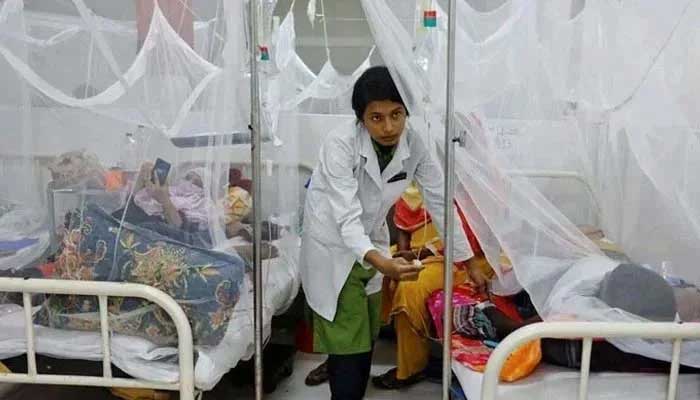
KARACHI: Pakistan’s malaria burden has jumped to one of the highest in the Eastern Mediterranean Region, with the new ‘World Malaria Report 2025’ warning that rising drug resistance could undermine global malaria control and push high-burden countries like Pakistan into a deeper health cri sis if urgent measures are not taken. According to the WHO report, Pakistan now records more than three million malaria cases a year, placing it among the region’s largest contribu tors after Sudan. The report notes that Pakistan is one of the few countries where malaria incidence and mor tality have more than doubled since 2015, despite global targets calling for sharp reductions by 2025. Globally, malaria continues to climb, WHO says, adding that an estimated 282 million cases and more than 610,000 deaths occurred in 2024, driven largely by conflict, climate-linked disasters, and funding shortfalls. Africa remains the epicentre, accounting for more than 90 per cent of global deaths, while countries in the Eastern Mediterra nean, including Pakistan, Afghanistan, Somalia, and Yemen, have also reg istered steep increases after climate emergencies. In Pakistan, the 2022 floods triggered the country’s sharpest spike in malaria infections. More than 30 million people were affected, over a thousand health facilities were dam aged, and widespread stagnant water created ideal breeding conditions for mosquitoes. Mass displacement, overcrowded shelters, and disrupted primary care allowed malaria to flare across flood-hit districts. A major public health response led by national and provincial authori ties, supported by WHO and partners, helped bring down cases in 2024. Expanded screening, vector control, diagnostic availability, and rapid treat ment prevented more than a million infections. But the WHO report makes clear that Pakistan remains off track for the 2030 global milestones. Pakistan’s malaria control strategy relies heavily on artemis inin-based combination therapies, particularly artemether–lumefantrine plus primaquine for Plasmodium falciparum and chloroquine plus primaquine for Plasmodium vivax. Free testing, free treatment, and nationwide mosquito-net distribution form the backbone of national policy. The WHO report’s biggest warn ing centres on antimalarial drug resist ance. Partial artemisinin resistance has now been confirmed in several African countries and is suspected in parts of the region. These mutations delay parasite clearance and place heavier reliance on partner drugs like lumefantrine and amodiaquine, raising fears that frontline treatments could lose their effectiveness. The report cautions that drug resistance is spreading faster than existing surveillance systems can detect. Weak private-sector regula tion, presumptive treatment, poor drug quality, and the circulation of falsified medicines all accelerate the threat — conditions common