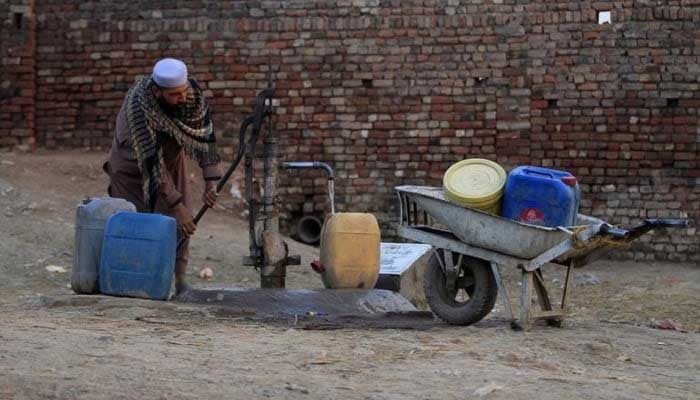
ISLAMABAD: Federal Minister for Water Resources Mueen Wattoo On Monday presented detailed data in the National Assembly regarding the country’s available water resources in relation to population growth. In a written reply to a question from Dawar Khan Kundi, the minister stated that in 2017, Pakistan’s total population was 207.77 million, with a per capita water availability of 1,102 cubic meters per person (World Bank, 2019). In 2023, the population reached 241.49 million, resulting in per capita water availability of 948 cubic meters per person. Considering the popu lation growth rate of 2.55 percent, the population is projected to reach around 288.04 million by 2030. Accord ingly, the estimated annual per capita water availability for 2030 is projected to be 795 cubic meters. The primary cause of the decline in per capita water availability and Pakistan’s transition from a water stressed to a water-scarce country is its population growth. Between 1972 and 2020, the population increased by 2.6 times, significantly raising the demand for water. As a result, water withdrawals have increased over the years, with 82 percent of the country’s renewable water resources currently being utilised, compared to just 62 percent in 1977. The National Water Policy (NWP) 2018, duly approved by the Council of Common Interests (CCI), takes cognisance of the water crisis and pro vides an overall policy framework and guidelines for a comprehensive plan of action. The policy also highlights the strategic priorities for effective planning and management of water resources in all sectors, i.e., improving storage facilities, water governance, investing in modern irrigation tech nologies, and enhancing climate-resil ient water management strategies to address water scarcity and ensure a sustainable water-secure future.