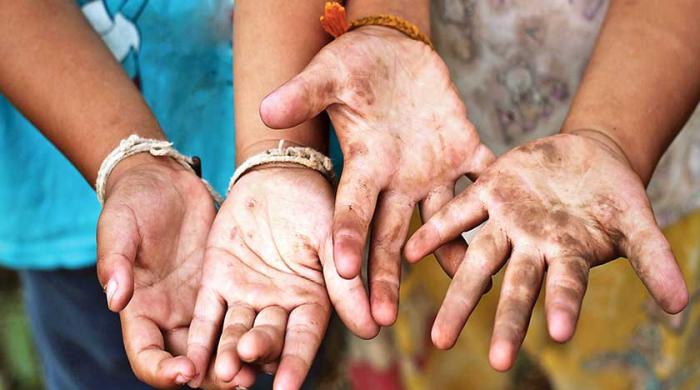
It is estimated that around 3.3 million children in Pakistan are engaged in some form of labour. Many of them are deprived of basic rights, including education, healthcare and protection. You! takes a look…
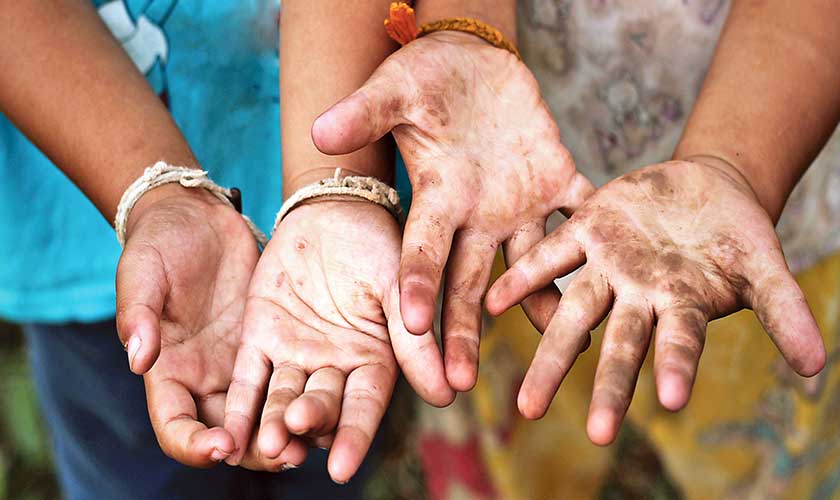
Childhood should be a time for learning, safety and gradual discovery of the world – a period when children can attend school, play and develop the confidence and skills needed for later life. Yet, for many children in Pakistan, it becomes a period marked by work, responsibility and hardship, often in conditions that are physically demanding and emotionally difficult. This gap between what childhood ought to be and what it often is points to a serious social and economic problem that affects not only individual lives but also the wider progress of society.
Child labour in Pakistan is not a simple or isolated issue; it is closely linked to poverty, as families struggling to meet basic needs rely on the extra income their children can earn.
Population pressures, unemployment among adults and rising living costs also play a major role in pushing children into the workforce at an early age. In addition, longstanding social practices and a general acceptance of child labour in some communities make it harder to challenge and change the situation.
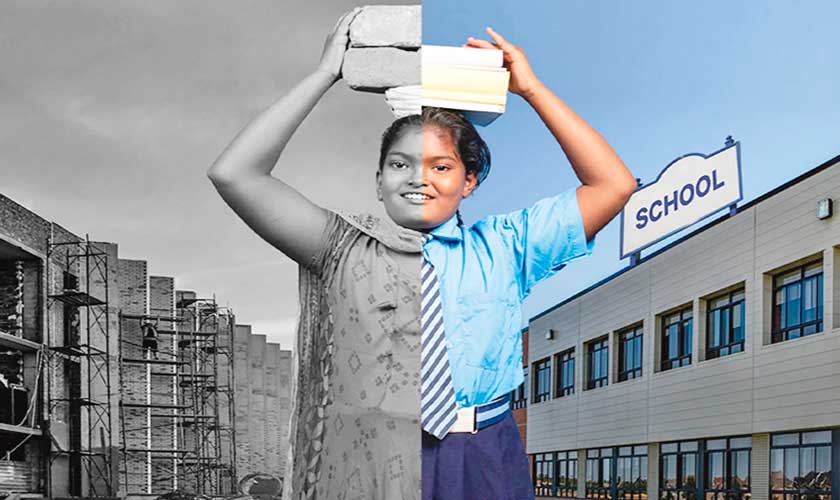
Together, these factors create a cycle that is difficult to break, making child labour one of the country’s most persistent and complex challenges.
A dismal picture
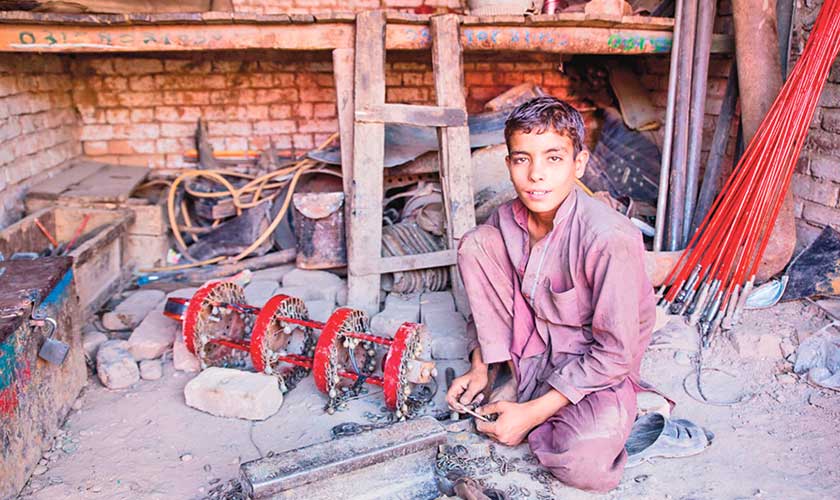
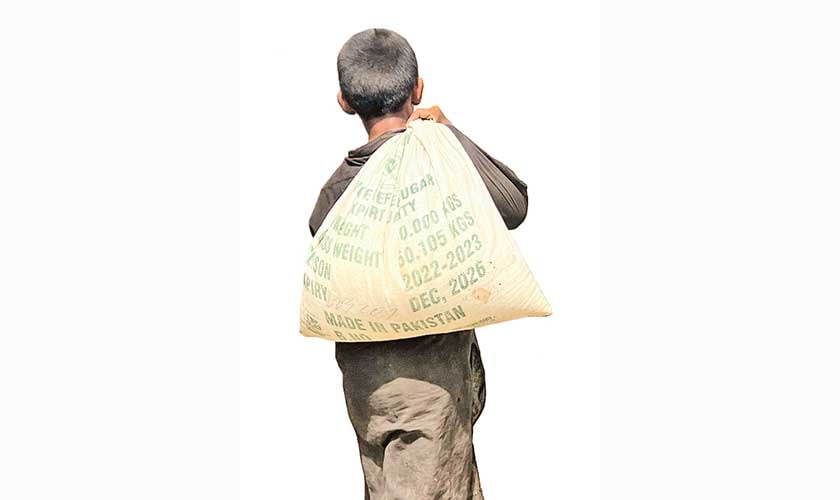
Estimates shared by international organisations working in child welfare suggest that around 3.3 million children in Pakistan are engaged in some form of labour. Many of them are deprived of basic rights, including education, healthcare and protection. They can be seen working in agriculture, domestic service, roadside stalls, small factories, workshops and brick kilns. In both rural and urban settings, children contribute to family income, often at the cost of their physical and mental wellbeing. Their work is frequently informal and unregulated, making it difficult to monitor conditions or ensure safety.
Surveys supported by development partners and highlighted in public reports indicate that in Sindh alone, more than 1.6 million children between the ages of 5 and 17 are engaged in labour. A considerable number of these children are involved in hazardous activities that expose them to injury, illness and long-term health problems.
Research findings also suggest that nearly one-fifth of children in the province are part of the labour force, with higher levels in rural areas. These figures underline the depth of the challenge and show that child labour is not limited to a few isolated regions but is present across different parts of the country.
At the global level, child labour continues to be a serious issue. Updates shared by the United Nations indicate that nearly 138 million children worldwide are engaged in labour, with many involved in hazardous work.
Trapped by poverty
The reasons behind child labour in Pakistan are closely tied to economic hardships. Poverty remains the leading cause, pushing families to depend on every available source of income. In households where parents struggle to meet daily needs, children are often seen as contributors rather than dependents.
Reports from labour and human rights organisations suggest that a large proportion of the poorest families have at least one working child. When faced with rising living costs, unemployment or unstable incomes, sending a child to work can appear to be a practical decision, even though it has serious long-term consequences. This creates a cycle in which poverty leads to child labour and child labour in turn limits future opportunities, keeping families trapped in poverty.
A barrier to education
The consequences of child labour extend far beyond the immediate challenges faced by working children. One of the most serious impacts is on education. Limited access to quality education further deepens the problem, as schools may be unavailable, unaffordable or lacking in proper facilities, leaving children with few alternatives.
Evidence from development organisations shows that children engaged in labour are far less likely to attend school regularly. Even when they are enrolled, their attendance is often irregular due to work commitments. Factors such as poor school facilities, a lack of trained teachers, long distances to schools and hidden costs such as uniforms and books discourage families from prioritising education. Children who spend their days working are less likely to complete their schooling, which limits their chances of securing stable, well-paid employment in the future.
Social attitudes and cultural norms also influence the persistence of child labour. In some communities, it is considered normal for children to start working at an early age, particularly in family-run businesses or agricultural activities. While helping families in small ways can be part of learning responsibility, the boundary between light assistance and harmful labour is often unclear. In many cases, parents see immediate income as more valuable than long-term educational benefits, especially when survival is at stake.
Health hazards
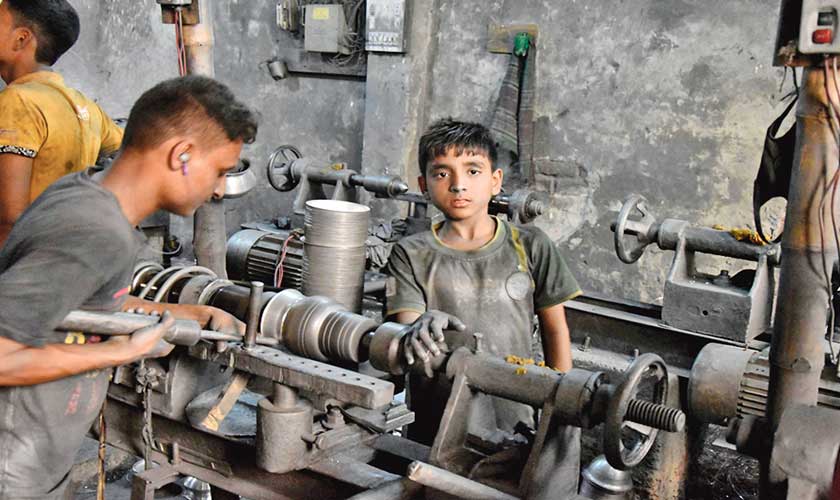
Over time, children may take on heavier workloads that interfere with their health. Hazardous work can lead to injuries, chronic illnesses and long-term physical damage. Children working in factories may inhale harmful dust or chemicals. Studies conducted by labour organisations and academic institutions have documented how these environments expose children to harmful substances, extreme temperatures and dangerous machinery. On the other hand, those in agriculture may be exposed to pesticides. The physical strain of long working hours can also affect their growth and development.
In addition to physical health, there are psychological effects. Children who work in stressful or abusive environments may experience anxiety, fear and emotional distress, which can have lasting effects on their well-being.
Stolen childhood
Similarly, domestic labour is one of the most hidden forms of child labour. Many children, particularly girls, are employed in households where they carry out cleaning, cooking and caregiving duties. Observations indicate that child domestic workers often face long working hours, little rest and limited protection from abuse. Because this work takes place in private homes, it is difficult to monitor and regulate. As a result, many cases of exploitation remain unreported, as the children involved have little access to support systems.
World Day Against
Child Labour
World Day Against Child Labour, observed each year on June 12th, aims to raise awareness and foster global action against the exploitation of children. It serves as a reminder that every child deserves a safe and fulfilling childhood. It calls attention to the immediate need to address the factors that push children into labour and to strengthen systems that protect them. In Pakistan, this means investing in education, supporting families, enforcing laws and raising awareness at all levels.
The path forward is challenging but achievable. By focusing on long-term solutions and working together, Pakistan can reduce child labour and create better opportunities for its children. Each step taken to improve education, reduce poverty and protect children’s rights brings the country closer to a future where no child is forced to work at the expense of their childhood. Such a future would not only benefit individual children but also contribute to the overall progress and prosperity of the nation.
Combatting child labour in Pakistan
Pakistan has introduced several laws and policies aimed at addressing child labour. The Employment of Children Act and the Bonded Labour System Abolition Act are among the key legal frameworks designed to protect children. Provincial governments have also developed laws that define hazardous occupations and set minimum age limits for employment.
Policy discussions and official reports suggest that while these laws provide a foundation, enforcement remains a significant challenge. Limited resources, weak inspection systems and a lack of public awareness often reduce their effectiveness.
Civil society organisations and international partners have played their role in supporting efforts to reduce child labour. Programme evaluations indicate that initiatives focusing on education, social protection and community awareness have achieved positive outcomes in certain areas. For example, conditional cash transfer programmes that provide financial support to families in exchange for school attendance have shown promising results. Studies show that when families have stable incomes, they are more likely to keep their children in school. Flexible learning options and vocational training programmes can also provide alternatives for older children who have already entered the labour force, helping them transition into safer and more productive opportunities.
Awareness campaigns have also helped change perceptions, encouraging communities to recognise the harmful effects of child labour and the importance of education. Community involvement is another key factor in creating sustainable change. When communities work together, they can create an environment where child labour is discouraged and children’s rights are protected.
There is a dire need for data and research to shape effective policies. Recent national and provincial child labour surveys, supported by international development organisations, have provided valuable insights into the scale and nature of the problem. These findings help policymakers design targeted interventions and allocate resources more effectively.
Reports from international labour bodies suggest that responsible business practices, regular monitoring and transparent reporting can help reduce the demand for child labour. Companies that adopt ethical standards and invest in community development can contribute to long-term change by supporting education and creating decent work opportunities for adults.
Technology and media are also playing a growing role in raising awareness. Digital platforms, television campaigns and social media initiatives have helped bring the issue of child labour into public discussion. Documentaries, news reports and storytelling efforts have highlighted the lived experiences of working children, encouraging empathy and action.
Observations from communication campaigns suggest that when people are informed and engaged, they are more likely to support policies and practices that protect children. Despite the challenges, there are signs of gradual progress. Increased awareness, stronger legal frameworks and ongoing initiatives reflect a growing commitment to addressing child labour in Pakistan. However, the pace of change needs to be accelerated to ensure that all children can enjoy their basic rights. This requires coordinated efforts from government institutions, civil society, international partners and local communities.
The writer is a seasoned journalist and a communications professional. He can be reached at [email protected]