More than a tribute, Eternal Echoes explores how Nusrat Fateh Ali Khan’s influence continues to shape musicians and audiences decades after his passing. Through personal memories and musical insight, the documentary celebrates both a legendary artist and the enduring power of qawwali.
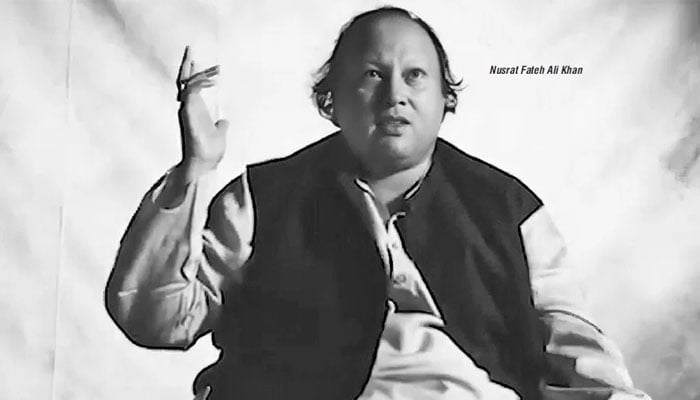
We see countless documentaries about legendary artists that try to explain true greatness. Yet, very few actually succeed, mostly because greatness isn’t something you can easily dissect. It is something you feel rather than define. Eternal Echoes: A Tribute to Nusrat Fateh Ali Khan - Making of ‘The Night of Song’ deeply understands this challenge.
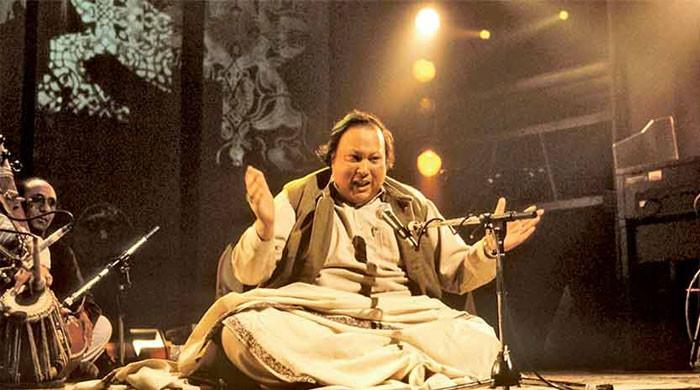
Instead of trying to over-analyse the genius of Nusrat Fateh Ali Khan, this 22-minute documentary, spearheaded by musician and producer Mekaal Hasan and directed by Luke Azariah, explores the lasting impact of a man whose voice still echoes through generations long after his passing.
The film works beautifully as a tribute, an archive project and a behind-the-scenes look at Hasan’s ambitious recreation of Khan’s landmark album Night Song. To do this, Hasan brings together a fascinating cast of characters. Friends, collaborators and disciples come forward to paint a vivid picture of a musician whose influence reached far beyond the stage.
Some of the most compelling moments in the documentary come from these personal recollections. Cultural patron Yousuf Salahuddin looks back on intimate performances inside his haveli, describing Khan as a “travelling university, a magnetic soul around whom other artists naturally gathered”.
Flute virtuoso Muhammad Ahsan Pappu, a long-standing member of Mekaal Hasan Band, remembers recording with Khan during the Rehmat Gramophone years, witnessing firsthand the deep humility and musical curiosity that accompanied his extraordinary talent.
These warm anecdotes bring a genuine humanity to a figure we so often speak about in almost mythical terms.
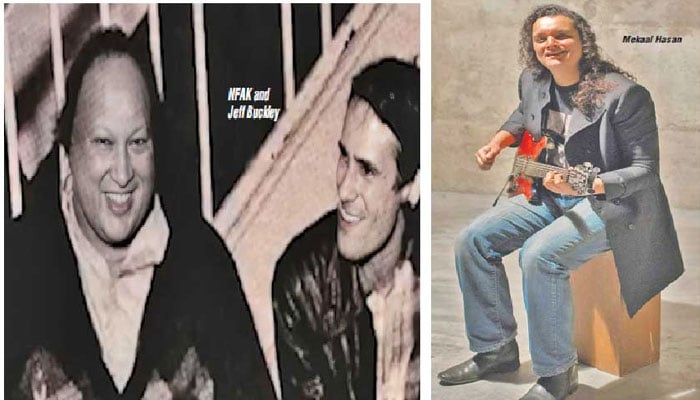
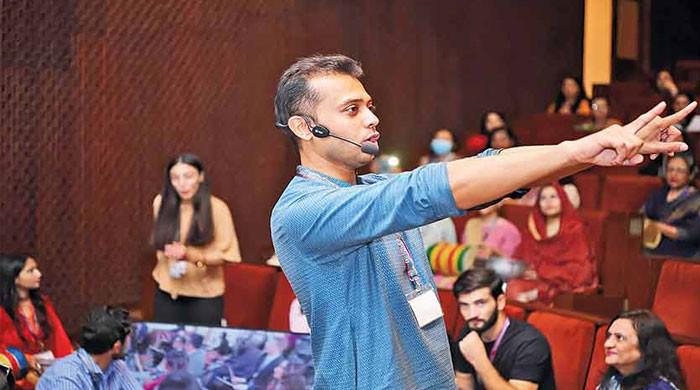
Mekaal Hasan guides us through the documentary as its central voice, offering some of its most insightful observations. He argues that qawwali history has two defining moments: first with the compositions of Amir Khusrau and then centuries later with Khan. While that might sound like a provocative claim, it underscores the sheer scale of Khan’s contribution. Hasan is particularly brilliant when he talks about the universality of Khan’s compositions. He points out how songs written by a vocalist with such astonishing technical ability still remain accessible enough for ordinary people to sing along.
The documentary also shines by placing Khan within a global context. When it mentions artists like Jeff Buckley, Peter Gabriel, Eddie Vedder, Michael Brook and even Madonna, it reminds us that Khan’s appeal transcended geography and language.
At its core, though, Eternal Echoes focuses just as much on preservation as it does on remembrance. Hasan’s desire to revisit and recreate Night Song opens up a much larger conversation about safeguarding cultural heritage.
Salahuddin shares pressing concerns about lost archives and deteriorating recordings, adding an unexpected urgency to the film. Throughout the documentary, we are pushed to ask
what responsibility contemporary artists and institutions have in preserving a legacy that belongs not just to Pakistan, but to the entire world.
If the film has a limitation, it comes directly from its greatest strength. At just 22 minutes long, it feels more like a brilliant introduction than a definitive exploration. Several fascinating threads including Khan’s international collaborations, his detailed recording history and the deep influence of Night Song itself, beg for a much closer look. Viewers who already know Khan’s life well might find themselves wishing for more detail and context. Still, the short runtime does not take away from the documentary’s emotional punch.

Vocalist and qawwal Shehzad Ali Khan insists that Khan remains alive through his music. While that sentiment could easily sound like a cliché, it acts as the central truth of the film.
Every single interviewee, whether talking about compositions, live shows or personal encounters, reaffirms the idea that Khan’s legacy is not frozen in the past. Instead, it is actively shaping the present.
What ultimately elevates Eternal Echoes is its refusal to treat qawwali as a relic. Through Hasan’s reflections on its structure and adaptability, the documentary presents qawwali as a living, evolving art form rather than a museum piece.
One of the documentary’s most compelling ideas comes when Hasan compares qawwali to Western blues and gospel traditions. Just as gospel music grew out of communal worship and call-and-response traditions within the church, qawwali thrives on the same dynamic between the lead performer and the collective chorus. Both forms are rooted in faith, community and shared experience, making them uniquely powerful vehicles for human connection. For Hasan, these deep commonalities explain why qawwali continues to resonate across different cultures and why it remains one of South Asia’s most exportable musical traditions.
By highlighting these connections, the documentary successfully shifts the conversation from pure nostalgia to future possibility. Eternal Echoes may start out as a simple tribute to Nusrat Fateh Ali Khan, but it ends as a celebration of something much larger: the enduring power of music to outlive its creators, bridge divides and carry cultural memory forward. For anyone interested in Khan’s legacy or the future of qawwali itself, this film offers a brief but deeply rewarding watch.
– To view the full documentary, you can find it on Mekaal Hasan’s YouTube page.